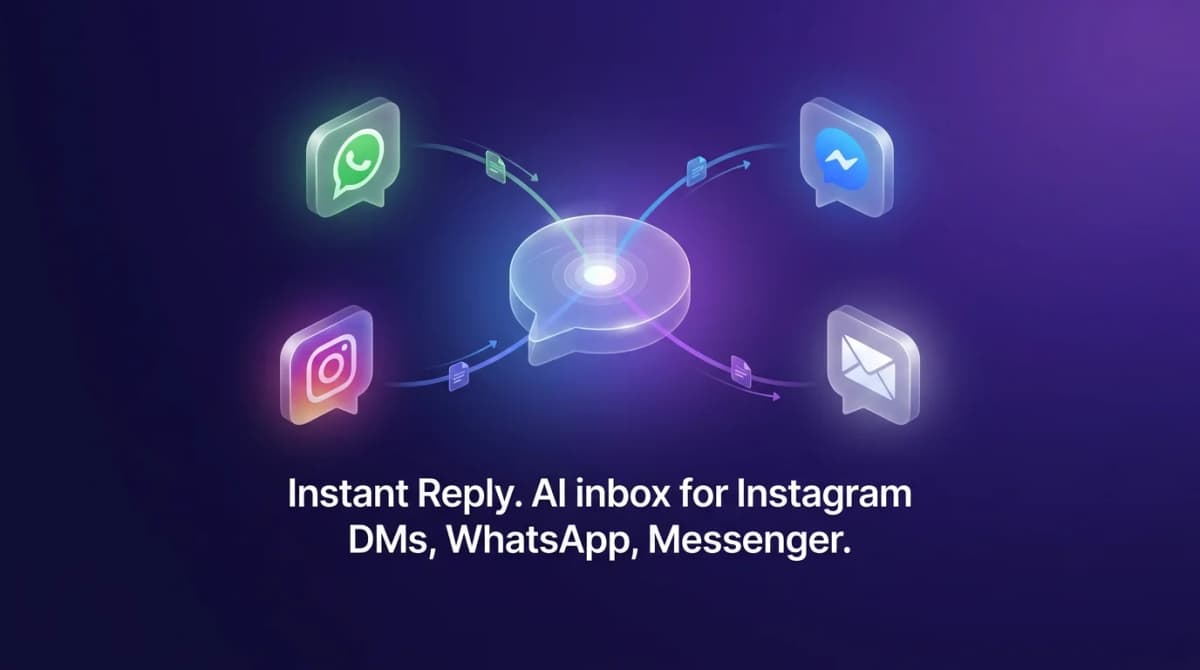
Your customers do not care which channel they use to contact you. They expect a consistent, fast response whether they message on WhatsApp, Instagram, or Messenger. An omnichannel messaging platform makes that possible without tripling your workload.
The Problem With Managing Channels Separately#
Most businesses start by handling each channel independently. One person watches Instagram DMs. Someone else handles WhatsApp. A third person monitors Messenger. This creates three problems:
Scattered customer history. When a customer who previously messaged on Instagram reaches out on WhatsApp, your agent has no context. They start from scratch, ask the same questions, and frustrate the customer.
Inconsistent response times. Instagram gets fast replies. WhatsApp is slower. Messenger is checked twice a day. Your customers notice.
Siloed knowledge. Your best agents handle one channel. Their knowledge does not transfer to the AI or to other channels automatically.
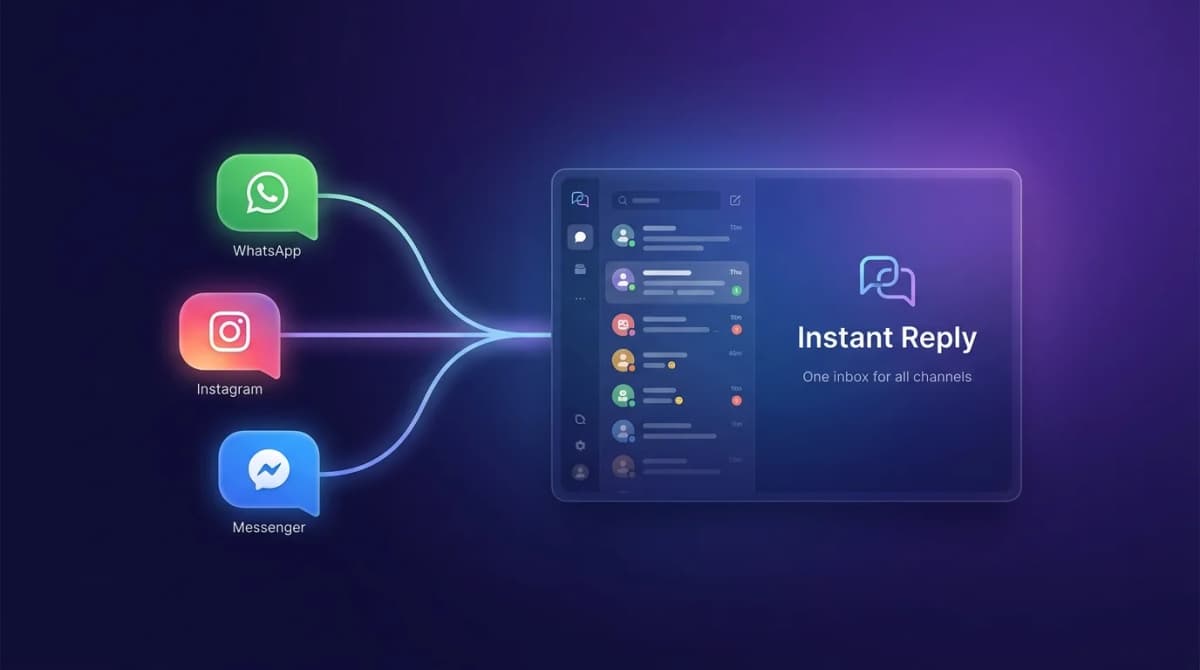
An omnichannel platform solves all three. One inbox, shared context, unified AI.
What an Omnichannel Messaging Platform Includes#
A true omnichannel platform like Instant Reply in 2026 provides:
- Unified inbox: All channels in one queue. Assign by channel, agent, or priority from a single interface.
- Cross-channel customer profiles: When a customer messages on two channels, their history is linked. Agents see the full picture.
- Single AI knowledge base: Train the AI once with your products, policies, and tone. It applies to all channels -- no separate bots with inconsistent answers.
- Unified analytics: Response time, resolution rate, and conversion across all channels in one report.
- Shared team management: Assign agents to channels, set coverage rules, track individual performance across all channels.
Omnichannel vs Multichannel: Why the Distinction Matters#
These terms get used interchangeably. They should not be.
Multichannel: You have multiple channels. Each one is its own silo. Different logins, different inboxes, different data. Agents switch between apps to see messages. Customer history lives on one platform only.
Omnichannel: Multiple channels unified into one system. One login. One inbox. Customer history visible regardless of which channel they used. AI trained once, applied everywhere.
The difference is measurable in your own data. Track these before and after you consolidate:
- Average first-response time across channels
- First-contact resolution rate
- Conversion on inbound leads
Why would they improve? Faster responses, better context for agents, and AI that answers consistently across channels instead of giving different quality answers based on which channel a customer chose.
The Meta Channel Trio: WhatsApp, Instagram, Messenger#
In 2026, the three highest-ROI channels for consumer-facing businesses are all owned by Meta: WhatsApp Business API, Instagram DMs via the Messenger Platform, and Facebook Messenger. Running all three from a single inbox with a single AI is the highest-leverage omnichannel setup available.
Why Meta? Three reasons:
- User base: WhatsApp (2B users), Instagram (1.5B), Messenger (1B). Your customers are almost certainly on at least two of these.
- Official API: Meta provides official APIs for all three. Legitimate tools use these APIs, meaning no account bans, no Terms of Service violations.
- Shared infrastructure: Because all three channels use the Meta Messenger Platform API architecture, building a unified inbox that covers all three is technically cleaner than multi-platform alternatives.
An omnichannel inbox covering WhatsApp + Instagram + Messenger handles the majority of customer messaging volume for most consumer businesses with a single tool.
Top Omnichannel Messaging Platforms Compared#
Instant Reply#
Focused on the Meta channel trio. AI-powered replies trained on your business. Plan-based pricing. Setup uses Meta's official connection flows, so timing depends on your Meta account.
Best for: SMBs where WhatsApp, Instagram, and Messenger are primary customer channels.
Price: Starter $59/month (Instagram + Messenger), Growth $129/month (adds WhatsApp), Pro $349/month.
Respond.io#
Covers more channels (Telegram, LINE, Viber, WeChat) with a powerful workflow builder. Better for enterprise teams with complex routing needs.
Best for: Larger teams across diverse messaging channels including Asian markets.
Price: plan plus included users plus Monthly Active Contacts, with WhatsApp fees billed separately; see respond.io's pricing page (checked September 29, 2026).
Freshdesk Omnichannel#
Helpdesk-first platform with email, phone, chat, and social channels. WhatsApp integration available on Growth+ plans.
Best for: Teams that need a full helpdesk with SLA management alongside social messaging.
Price: per agent per month by plan; see Freshdesk's pricing page for current tiers.
Zendesk Suite#
Enterprise-grade omnichannel helpdesk. Email, phone, chat, social, and WhatsApp all unified. Most expensive but most comprehensive.
Best for: Large support operations with 50+ agents and complex compliance requirements.
Price: per agent per month by suite tier; see Zendesk's pricing page for current tiers.
How to Choose Your Omnichannel Messaging Platform#
Three questions decide this:
1. Which channels are your highest volume? If it is WhatsApp + Instagram + Messenger, a Meta-specialized platform gives you the best per-channel features. If it includes Telegram, LINE, or WeChat, you need a broader multi-channel tool.
2. How big is your team? Flat-plan platforms can save money for small teams, while per-user platforms can make more sense for large teams when the per-seat cost is justified by enterprise features (SLAs, compliance, advanced reporting).
3. Do you need AI or rule-based automation? AI-powered platforms handle open-ended customer questions. Rule-based platforms handle structured flows better. Most businesses in 2026 benefit more from AI -- open-ended customer questions are the norm, not structured flows.
Start Your Omnichannel Setup#
The fastest path to a unified messaging inbox is a 30-minute setup with Instant Reply. Connect WhatsApp, Instagram, and Messenger. Upload your business knowledge. Set your team's coverage hours. Done.
Start a free 7-day trial with all channels included. See how unified omnichannel messaging changes your response time and conversion rate before paying. Or take the interactive product tour to see the inbox, AI replies, and analytics before signing up.
Your customers are messaging you on 3 channels. Your business should answer on all 3, consistently, from one place.